
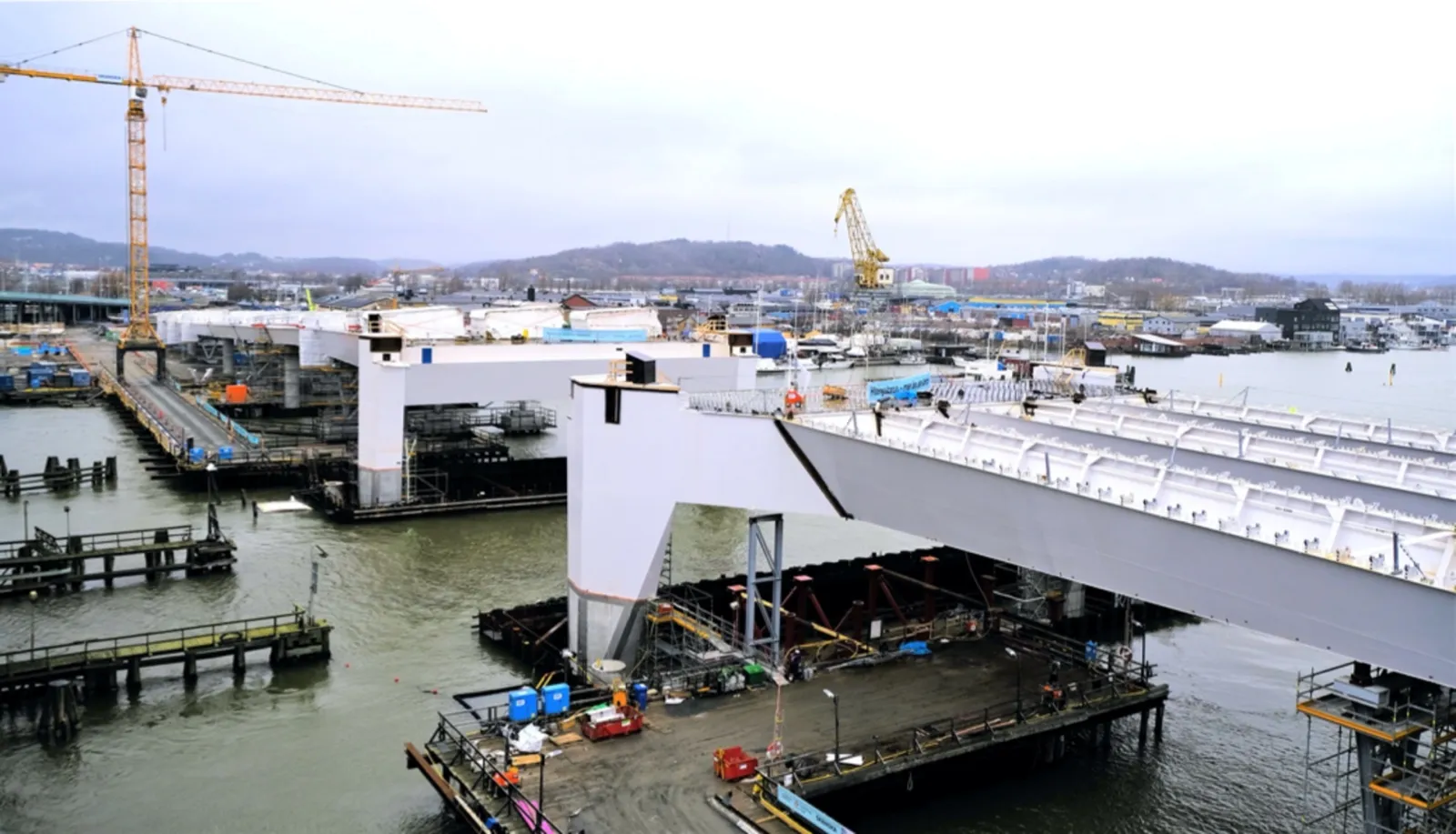
HiFIT · Steel bridges
Where HiFIT has been used on bridges, what the codes allow, and the research behind it.
New girders and existing orthotropic decks, for contractors and owners including Trafikverket and NCC Infrastructure.
Names HiFIT, PIT and UIT as qualified post-weld treatment technologies whose effectiveness has been proven by experimental research. Other HFMI tools must show similar performance by testing.
Source: Chalmers ACE 2024:3
Design credit by detail category, steel grade and stress ratio. At S355, the credit is four FAT classes, each roughly a 12.5% increase in allowable stress range, at stress ratio R ≤ 0.15.
Application, inspection and operator qualification.
German fatigue design rules for high-frequency hammer peening.
These are European and IIW rules. On a US bridge, the engineer of record decides how the credit is applied.
Chalmers found HFMI effective on existing details with surface cracks up to 2.25 mm deep.